
A Grade I Listed Historic Estate Founded in 987 AD
Cerne Abbey is one of England's oldest surviving private historic estates.
Founded in 987 AD, Cerne Abbey is Grade I listed by Historic England and one of Dorset's most significant medieval sites. Set in the historic village of Cerne Abbas, the estate sits directly below the famous Cerne Abbas Giant, one of England's most iconic and mysterious chalk hill figures.
This is not a museum.
It is a home, a working estate and a living piece of English history, and one of the most distinctive places to visit, stay and celebrate in Dorset.
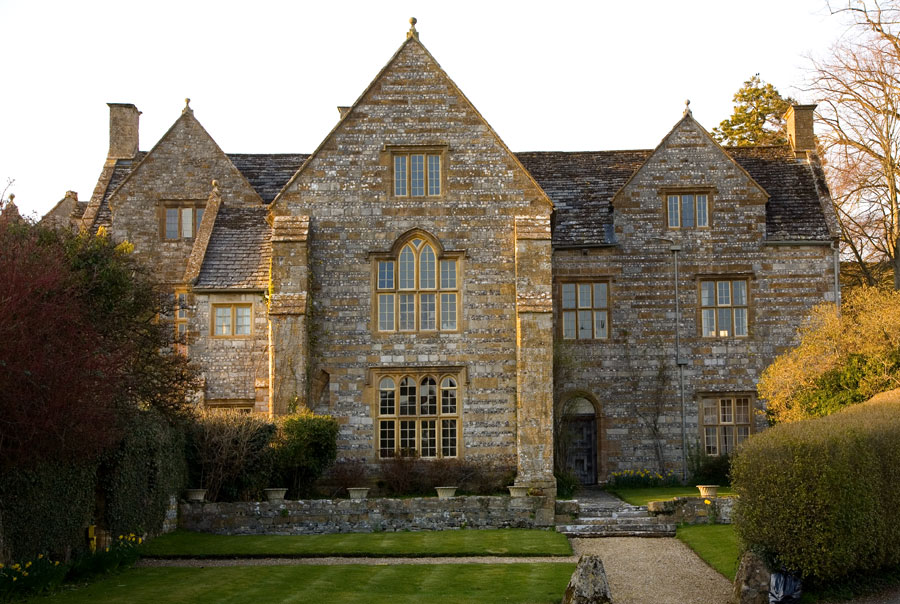

The Abbot's Porch
Built around 1497 to 1509 by Abbot Thomas Sam, the three-storey Abbot's Porch is one of the finest surviving Tudor monastic gatehouses in England. Its carved heraldic stonework, two-storey oriel window and original spy hole speak to a period when Cerne Abbey was one of the most important religious houses in Wessex.

The Guest House
Built between 1458 and 1471 by Abbot John Vanne, the Guest House is one of the few surviving monastic guest houses in England. Queen Margaret of Anjou is believed to have sought sanctuary here in 1471 during the Wars of the Roses. It remains the most substantial surviving building of the former monastery.

The Abbey Grounds and The Dig
Beneath the grounds of the estate, recent archaeological excavations known locally as The Dig continue to uncover the foundations of the lost monastery, giving new insight into the original scale and layout of one of Dorset's most significant medieval sites.

The Gardens and Grounds
The abbey grounds include the Monument Courtyard, the pond garden, walled areas, lawns and views across the Cerne Valley. These spaces form the backdrop to private events, wedding celebrations, photography and quiet exploration throughout the year.

Cerne Abbey and the Cerne Abbas Giant
Cerne Abbey and the Cerne Abbas Giant share the same valley and the same thousand-year story.
The Cerne Abbas Giant, the famous chalk hill figure carved into the hillside above the village, overlooks the valley where the abbey was founded in 987 AD. While the exact origin of the Giant remains debated by historians and archaeologists, the abbey and the Giant have coexisted throughout recorded history, and the relationship between the two is one of the most intriguing aspects of Cerne Abbas as a place.
Many visitors combine a visit to the Cerne Abbas Giant with a visit to the abbey. The Giant is managed by the National Trust and viewable from a public footpath above the village. From there, the abbey grounds, the Abbot's Porch and the Guest House are all a short walk downhill into the village.
Parking is available at Kettle Bridge Lane Car Park, convenient for both.
Most visitors allow 45 to 90 minutes at the abbey grounds, plus time in the village.
The Guest House Cafe serves tea, coffee and cakes within the abbey grounds, a natural stopping point between the Giant and the village.
A Thousand Years of Notable Visitors
Cerne Abbey has welcomed monarchs, scholars, soldiers and travellers throughout its history.Among those connected to the estate over the centuries are King John, Henry III, Queen Margaret of Anjou and King Cnut, who is said to have both plundered and later patronised the abbey. In more recent times, the estate has welcomed Queen Elizabeth The Queen Mother, Sir Winston Churchill and King Charles III.
Ælfric of Eynsham, one of the most important writers of Old English prose, spent time at Cerne Abbey as a monk and teacher. His manuscripts, including sermons and translations that shaped early English literature, were written here before the Dissolution scattered the abbey's library across England.
This depth of history is not background detail. It is the reason people travel from across the country to visit, stay and celebrate here.

Press and Recognition
Cerne Abbey has been featured by:
BBC News: "Archaeologists are uncovering the lost Benedictine abbey that lay undisturbed for almost five centuries."
Escape to Britain: "One of the largest ancient monasteries in England, with over a thousand years of history."
Dorset Echo: "It's just gorgeous, a place of great history and beauty with so much to discover."
The estate has also been associated with film and photography for decades, including connections to the 1963 Academy Award-winning British film Tom Jones, and continues to be used as a location for heritage, editorial and documentary productions.

Visit the Abbey Grounds
Open daily from 9:00am to 8:00pm. Adults £5, children under 16 free. Explore the grounds, medieval buildings and Dorset countryside at your own pace.

Private Guided Tours
Led personally by the owning family for groups of 8 to 65. Includes access to the Abbot's Porch, the Guest House, The Dig and areas not open to general visitors.

Weddings & Wedding Receptions
A distinctive and personal setting for wedding receptions, celebrations and photography. St Mary's Church is 150 metres away for couples seeking a church ceremony followed by a reception at the abbey.

Private Events and Venue Hire
Available for drinks receptions, heritage talks, corporate gatherings, private celebrations and charity events, arranged individually to suit each occasion.

Filming and Photography
Medieval architecture, historic courtyards and Dorset countryside views. Suitable for period drama, documentary, editorial and heritage productions.

Accommodation
Stay within the historic grounds in the cottage, the studio or, by special request, selected rooms in the private west wing of the main house.